Summary
Apartment living versus house living for seniors offers distinctly different lifestyles, with the key difference being how residents spend their time and energy. Understanding the practical advantages of each option helps families make the right choice for their loved ones.
- Apartment living eliminates weekly home maintenance tasks like lawn care, roof repairs, and contractor coordination, freeing up hours for social programs, events, and personal interests
- Dining becomes a social experience with chef-prepared meals served daily in community spaces rather than solo meal planning, shopping, and cleanup at home
- Shared amenities including theaters, fitness centers, game rooms, and chapels replace the functions of a large house while offering convenient access to programs
- Scheduled transportation provides easy access to local attractions, appointments, shopping, and entertainment without the responsibility of driving or home upkeep
- The transition typically happens quickly, with most residents feeling at home within weeks once they engage in community programs and connect with neighbors
A house asks for something every single week. Mow this, patch that, wait on a contractor who promised they would be done by Thursday. Somewhere in the middle of all of it, many people start weighing apartment living versus house living for seniors, and the honest comparison often comes down to how a person wants to spend their days. Here is how the two options differ on a practical level, starting with the part almost everyone notices first.
Upkeep, Chores & Who Handles Them
In a house, the running list of chores looks something like this:
- Lawn mowing and landscaping.
- Roof repairs and exterior upkeep.
- Heating and air conditioning maintenance.
- Finding, scheduling, and paying contractors.
- Cleaning, laundry, and seasonal deep cleaning.
At Polo Park Estates, an Independent Living with supportive services** community in Midland, TX, associates take on the exterior work, building maintenance, and housekeeping, laundry included.
That is the practical core of house versus apartment senior living. The hours in the week do not change. What fills them does. Residents spend that time on games, events, time spent connecting with neighbors, or a run to Midland Park Mall on scheduled transportation rather than waiting on a plumber.
Dining & Daily Social Life
Kitchens are the second thing new residents tend to notice when moving to a senior living community. A house means planning, shopping, cooking, and cleaning up three times a day, every day. Here, our chefs prepare three meals daily, with seasonal rotating menus shaped partly by resident input, plus appetizers, entrees, and desserts worth sitting down for. Meals also happen at tables with other people, which is one of the key social benefits of apartment living for older adults.
The calendar handles the rest. A full-time program director builds each day around the 7 Dimensions of Wellness: from Health & Fitness opportunities to monthly themed dinners, clubs, games, happy hours, and movies in the on-site theatre.
Floor Plans, Amenities & Midland Itself
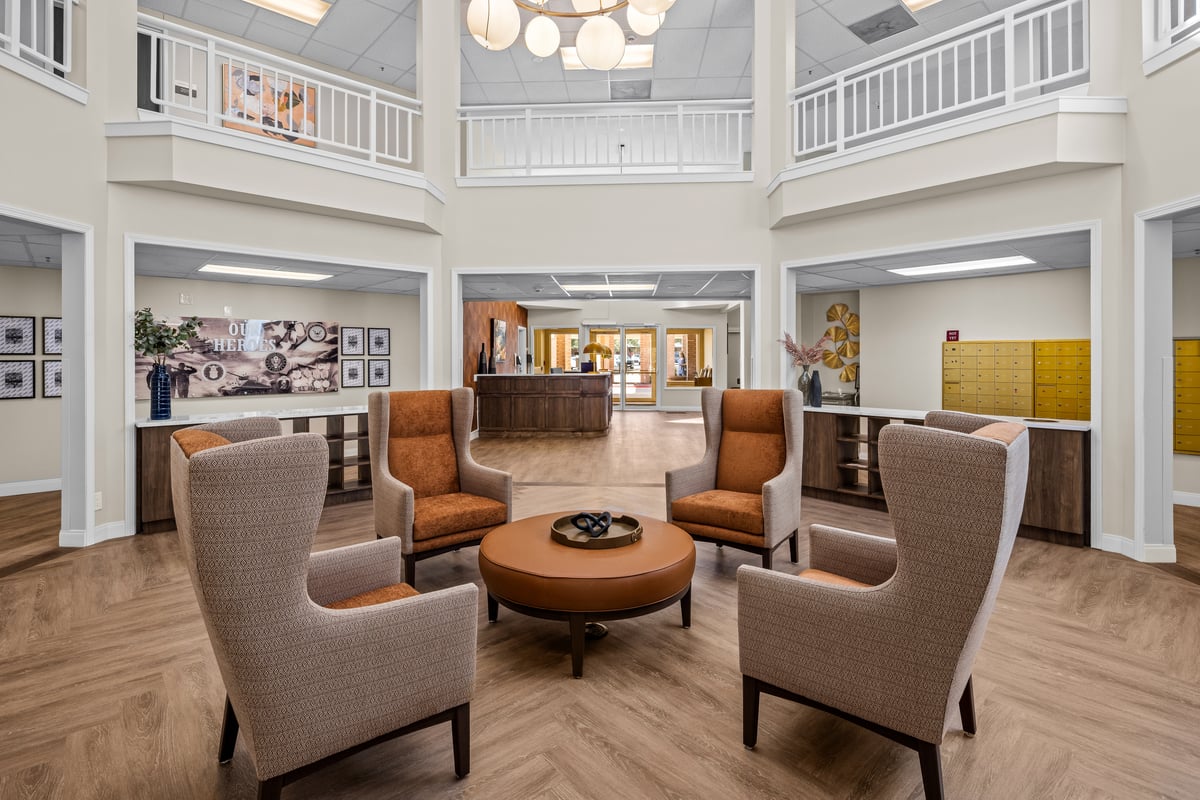
Our community was recently renovated with updated décor, new seating, and a lighter color palette throughout. Shared spaces take over the jobs a large house used to handle, including:
- Bistro and atrium for coffee and conversation.
- On-site theatre for movies and events.
- Health & Fitness center for daily movement.
- Game room for cards, mahjong, and many other friendly competitions.
- On-site chapel.
Midland stays close, too. The Wagner Noël Performing Arts Center and the Museum of the Southwest are both short drives away, and complimentary scheduled transportation covers appointments, shopping, and errands around town as well as trips for enjoyment and enrichment.
Transitioning From a House to an Apartment
Transitioning from a house to an apartment as a senior takes some planning, and it goes better when nobody rushes it. Tour a few communities first. Measure the furniture that actually matters, then let go of whatever has not been used in a decade. Most residents find that adjusting to apartment life as a senior happens faster than they expected, largely because the neighbors are already right down the hall.
Our Independent Living with supportive services** community is designed to support your independence while offering access to additional help—only when and if you want it. A choice of third-party providers is available onsite for your convenience, but you are under no obligation to use any particular one. This flexible approach is perfect for individuals or couples with varied needs. Extend your independent lifestyle by choosing to make our community your home.
Frequently Asked Questions
What are the biggest senior apartment living advantages?
One predictable monthly bill instead of taxes, utilities, and surprise repairs, plus three prepared meals a day and neighbors a few steps from your door.
How long does it take to settle in?
Most residents feel at home within a few weeks. Committing to one recurring program early on makes it easier to meet neighbors and moves things along faster than anything else.
What supportive services** can residents arrange?
Optional third-party providers include personalized home health, onsite therapies, visiting therapies, a visiting podiatrist, non-medical home care, visiting non-medical home care, hospice care, and visiting hospice care.
House or Apartment: Choosing What Fits
Both options can work, but the right answer depends on how someone wants their week to look. One asks for your free time; the other hands it back with a dining room, a theatre, and a full calendar attached. Schedule a personalized tour of Polo Park Estates to see what that looks like in person.
A choice of third-party providers is available onsite for convenience, but residents are under no obligation to use any particular one.